The History of Rome's Most Iconic Monuments And Why They Still Matter
Share
Every city has landmarks. Rome has monuments. The distinction matters. A landmark tells you where you are. A monument tells you who you are or at least, who we have been as a civilisation, and what we were capable of when we decided that nothing less than the extraordinary would do.
This is the brief, essential history of Rome's greatest monuments: what they were built for, how they survived, and why they continue to move everyone who stands before them.
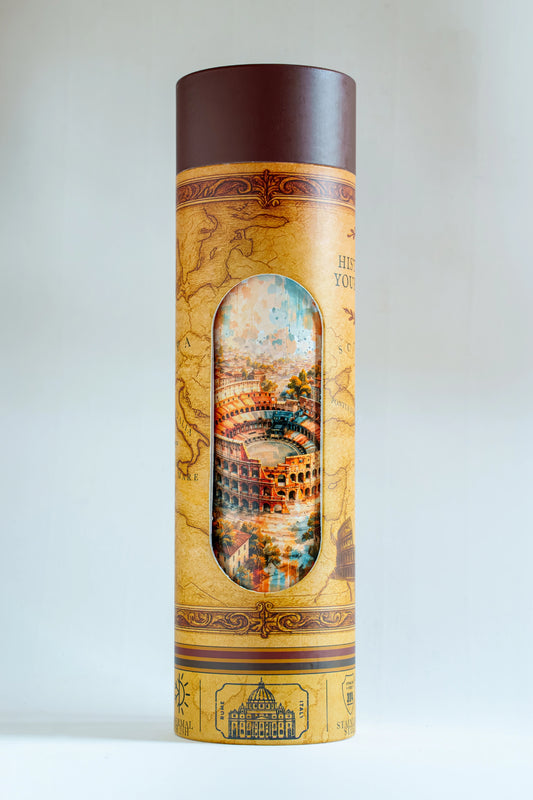
The Colosseum Built on Ambition, Stained by History
Construction began under Emperor Vespasian in 70 AD and was completed by his son Titus in 80 AD. The Flavian Amphitheatre the Colosseum's official name could hold between 50,000 and 80,000 spectators in a tiered seating arrangement that organised Roman society by status, gender, and occupation.
The games held here gladiatorial combat, animal hunts, public executions, and occasionally staged naval battles when the arena was flooded — were instruments of imperial power as much as entertainment. They kept the populace distracted and demonstrated the Emperor's ability to provide spectacular abundance.
The Colosseum survived the fall of the Western Roman Empire through transformation: a fortress in the Middle Ages, a quarry for Renaissance builders (much of the original marble facing was stripped for use in other buildings), and eventually a sacred monument to Christian martyrs who may have died within its walls.
Today it receives six million visitors annually and remains the most recognisable symbol of Rome and of Rome's greatest quality: the capacity to endure.
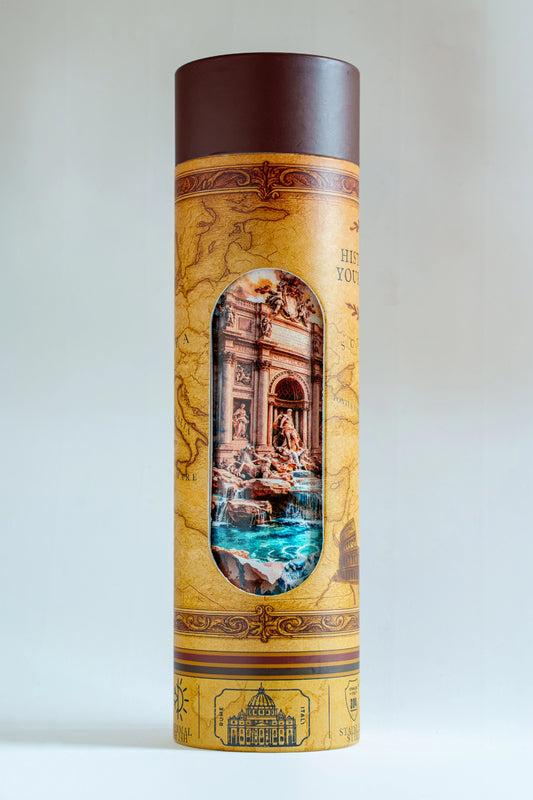
The Trevi Fountain - Where Water Becomes Theatre
The Trevi Fountain stands at the terminal point of one of Rome's ancient aqueducts the Aqua Virgo, constructed in 19 BC to bring water from a spring eight miles outside the city. For centuries, the aqueduct ended modestly at a small basin near the current site.
The theatrical fountain we know today was designed by Nicola Salvi and completed in 1762, commissioned by Pope Clement XII after a competition that Salvi narrowly won. The central figure of Neptune, flanked by tritons and sea horses, emerges from a facade that appears to grow directly from the Palazzo Poli behind it architecture and water theatre merged into a single overwhelming composition.
The coin-throwing tradition tossing a coin over your left shoulder guarantees a return to Rome dates to the mid-twentieth century and was popularised by the 1954 film "Three Coins in the Fountain." Approximately €1 million in coins is collected from the basin annually and donated to a Roman charity.
The fountain is most beautiful in the early morning, when the crowds are thin and the light is soft, or at night, when it is illuminated and seems to float above the dark piazza like a vision from another time.
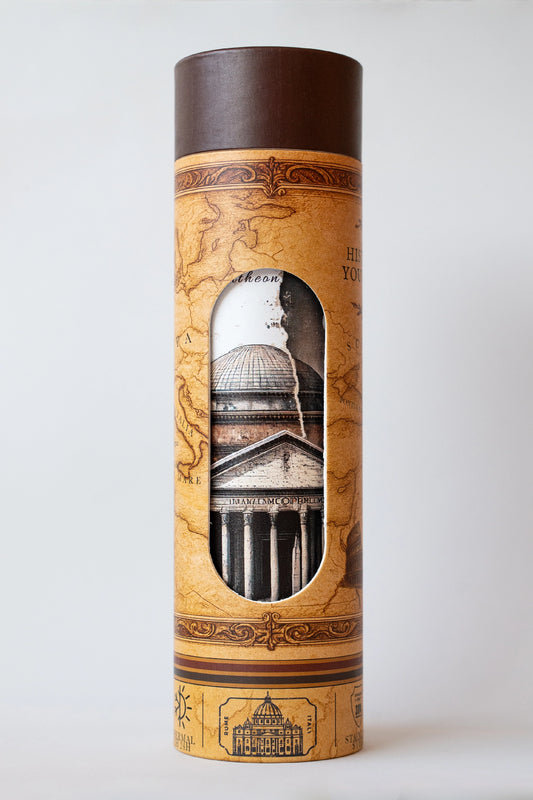
The Pantheon The Most Intact Building from Ancient Rome
Constructed around 125 AD under Emperor Hadrian, the Pantheon replaced an earlier temple built by Marcus Agrippa whose name remains on the inscription above the portico, a tribute from a modest emperor to a greater predecessor. The Pantheon was dedicated to all the gods of Rome, and its perfect circular form reflected the celestial sphere.
The dome 43.3 metres in diameter remained the largest in the world for over a thousand years. The oculus at its apex, 8.8 metres wide, is the building's only light source: a perfect circle of sky that tracks across the interior walls through the day and, during rain, allows water to fall directly onto the slightly domed floor, draining through 22 small holes.
The Pantheon survived because it was converted into a Christian church in 608 AD one of the earliest examples of Roman monuments being preserved through religious adoption. It remains one of the best-preserved ancient buildings on earth and a place of continuous use for nearly two thousand years.
Piazza Navona A Stadium Transformed
Piazza Navona follows the precise outline of the ancient Stadium of Domitian, built in 85 AD to host athletic competitions in the Greek tradition. The stadium held approximately 30,000 spectators and was one of the major entertainment venues of ancient Rome.
When the stadium fell into disuse, its substructures remained and the elongated oval became a natural public gathering space. Medieval and Renaissance buildings were constructed around its perimeter, preserving the stadium's distinctive shape.
The piazza's defining feature today is the Fountain of the Four Rivers by Gian Lorenzo Bernini, completed in 1651. Four colossal river gods the Nile, Ganges, Danube, and Río de la Plata support an ancient obelisk in a composition of extraordinary dynamic energy. It remains one of the supreme achievements of Baroque sculpture.
Why These Monuments Still Matter
The Colosseum, the Trevi Fountain, the Pantheon, Piazza Navona they are not simply old things that have survived. They are evidence that human beings are capable of creating structures and spaces of such beauty and ambition that they remain meaningful two thousand years later.
In an era that sometimes struggles to believe in permanence, Rome is a standing argument that some things last. That what we build with care, with skill, and with a genuine aspiration to beauty does not disappear.
That is why these monuments still matter. And it is why, when you leave Rome, you want to carry a piece of them with you.
RomAntica Design exists for exactly that reason.